Living with endometriosis means navigating a complex maze of physical and emotional discomfort. For patients seeking relief, it is essential to understand that managing endometriosis pain is rarely a one-size-fits-all solution. It requires a structured, multi-dimensional clinical approach tailored to an individual’s age, career, marriage plans and disease severity. In our dedicated center, we view pain management as a spectrum that ranges from medical suppression and lifestyle adaptations to definitive, state-of-the-art surgical excision.
The initial line of defense in general gynecology often involves medical management. This is primarily aimed at symptom suppression rather than curing the disease. Non-Steroidal Anti-Inflammatory Drugs (NSAIDs) are commonly used to block prostaglandins—the chemical compounds responsible for uterine cramping and localized inflammation. While useful for mild cases, NSAIDs only address the chemical symptoms, not the underlying disease masses. To stop the monthly cyclical proliferation and bleeding of endometriosis lesions, hormonal therapies are employed. These include combined oral contraceptives, high-dose progestins (such as Dienogest), or intrauterine devices like the LNG-IUS (Mirena). For advanced cases, Gonadotropin-Releasing Hormone (GnRH) agonists or antagonists are used to place the body into a temporary, reversible state of artificial menopause, effectively starving the lesions of estrogen.
While hormonal suppression can provide an essential ‘breathing space’ for pain relief, it has distinct limitations. First, these medications act as contraceptives, making them entirely unsuited for women actively trying to conceive. Second, they often carry systemic side effects, such as bone density loss, mood swings, hot flashes, and metabolic changes. Most importantly, medical management is merely a temporary blanket; once the medication is discontinued, the lesions frequently resume their growth, and the debilitating pain returns.
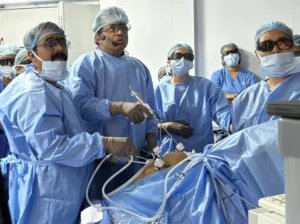
This brings us to the gold standard for definitive pain relief: Advanced Laparoscopic Excision Surgery (often abbreviated as LAPEX). Unlike ‘ablation’ or ‘fulguration’ —where a surgeon merely burns the top layer of the disease, leaving the active roots intact—true excision involves cutting out the disease in its entirety with a clear margin of healthy tissue. Excision removes the active source of inflammation, frees entrapped nerves, and restores normal pelvic anatomy. When performed by a highly specialized endometriosis surgeon, excision offers the lowest possible recurrence rates and the highest quality of long-term pain relief.
Finally, a truly holistic pain program must integrate supportive therapies. Chronic pelvic pain causes secondary issues, such as pelvic floor muscle spasms (myofascial pain), which can be brilliantly treated by specialized pelvic floor physical therapists. Furthermore, an anti-inflammatory diet rich in antioxidants, regular low-impact exercise, and stress reduction techniques help modulate how the brain processes pain. By combining cutting-edge surgical precision with comprehensive lifestyle and medical support, we can help women reclaim control over their bodies and live a life free from the tyranny of chronic pain.