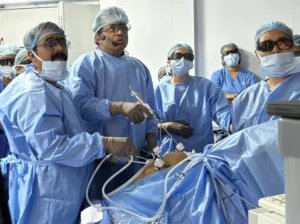
When general public discourse turns to endometriosis, it is frequently dismissed as ‘bad period pain. However, as a specialist dealing with complex pelvic diseases daily, I must emphasize that the pain associated with Deep Infiltrating Endometriosis (DIE) is a completely different clinical entity. It is an excruciating, exhausting, and debilitating condition that fundamentally compromises a woman’s quality of life. To truly manage this pain, patients and families must understand what DIE actually means and why it triggers such severe nerve-related and structural agony.
By medical definition, Deep Infiltrating Endometriosis occurs when endometrial-like lesions penetrate more than 5 millimeters beneath the peritoneal surface (the thin layer of tissue lining the abdominal and pelvic cavities). Instead of remaining on the surface of the organs, these aggressive lesions burrow deep into pelvic structures, including the uterosacral ligaments (the bands holding the uterus in place), the rectovaginal septum (the wall separating the vagina and rectum), the urinary bladder, and the bowel walls. This deep invasion triggers an intensive defense mechanism from the body: the formation of dense, rock-hard fibrotic tissue around the lesions.
Why is DIE so exceptionally painful? The secret lies in its neurological infiltration. These deep fibrotic nodules have a unique affinity for pelvic nerve fibers. As the lesions grow, they literally wrap around, compress, and invade the delicate autonomic and somatic nerves traversing the pelvis. Every time hormonal fluctuations occur during the menstrual cycle, these deep nodules swell and bleed internally, directly stimulating and irritating the entrapped nerve endings. This leads to what we classify as neuropathic pain—a severe, burning, or electric-shock-like sensation that persists outside of the period cycle.
Over time, this continuous nerve irritation triggers a phenomenon known as peripheral and central sensitization. In simple terms, the nervous system becomes hyper-reactive. The pelvic nerves become so highly sensitive that even normal bodily processes—such as the bladder filling with urine, or digested food moving through the bowel—are misinterpreted by the brain as intense pain signals. This explains why women with DIE suffer from an array of symptoms: severe dysmenorrhea (painful periods), deep dyspareunia (pain during intercourse), dyschezia (painful bowel movements), and chronic unremitting pelvic pain that fails to respond to conventional over-the-counter painkillers.
As an endometriosis surgeon, diagnosing DIE requires a combination of clinical experience, advanced imaging (such as specialized transvaginal sonography and pelvic MRI), and a deep understanding of pelvic neuroanatomy. Standard superficial laparoscopy often misses these hidden deep lesions. The definitive treatment for DIE pain is not continuous suppression with painkillers, but rather a highly specialized, radical laparoscopic excision where every single millimeter of deep fibrotic nodule is surgically dissected off the delicate nerves and organs. Realizing that your pain has a physical, anatomical, and neurological cause is the first major step toward escaping its grip.