Among the many heavy burdens imposed by endometriosis, deep dyspareunia—the medical term for severe, sharp, or aching pain felt deep within the pelvis during or after sexual intercourse—is undoubtedly one of the most devastating. Despite its profound impact on marital harmony, psychological health, and self-esteem, it remains a symptom shrouded in silence due to cultural taboos. As a dedicated specialist, I believe it is vital to bring this conversation into the light. Painful sex in endometriosis is not a psychological failure; it is a physical, treatable condition rooted in specific pelvic pathology.
To understand why sex hurts when you have endometriosis, we must look at the location of deep pelvic lesions. The most common site for deep infiltrating endometriosis is the area directly behind the uterus, specifically the uterosacral ligaments and the rectovaginal septum. The uterosacral ligaments act as the main suspension cables anchor the cervix to the lower spine. When these ligaments are infiltrated by endometriosis, they become intensely inflamed, rigid, and laden with highly sensitive nerve endings. During sexual intercourse, the physical movement of the cervix directly stretches and pulls on these scarred, rigid ligaments, triggering an immediate, deep, blinding pain that can linger as a dull ache for hours or even days afterward.
In advanced cases, the pain is compounded by structural immobility. If the uterus is fixed in a backward-facing position (a retroverted, fixed uterus) due to dense adhesions gluing it to the rectum, it loses its natural ability to lift and adapt during intimacy. This loss of mobility results in direct impact pain against the immobilized pelvic structures, making certain positions completely intolerable.
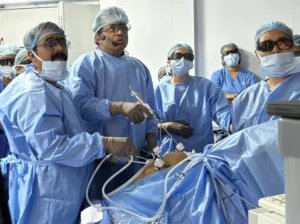
The treatment of deep dyspareunia requires a comprehensive, empathetic, and sequential clinical approach. The absolute cornerstone of long-term relief is the complete Laparoscopic Excision of the offending nodules. During this precise keyhole surgery, we carefully dissect the rectovaginal space and completely remove the deep fibrotic nodules from the uterosacral ligaments while carefully preserving the surrounding pelvic nerves. Once these hard, active sources of inflammation are removed, the structural elasticity of the tissues is restored, immediately reducing the physical trigger for pain.
However, surgery is often just the first step. When a woman has experienced painful intercourse for years, her body develops a defensive reflex known as secondary vaginismus—the involuntary tightening of the pelvic floor muscles in anticipation of pain. To heal this, we collaborate closely with specialized pelvic floor physical therapists who use biofeedback and gentle relaxation techniques to ‘re-train’ the pelvic muscles. Coupled with compassionate psychosexual counseling to rebuild confidence and intimacy, this multi-disciplinary approach allows women and their partners to successfully reclaim their intimacy, transforming sex from a source of dread into a normal, pain-free expression of love.