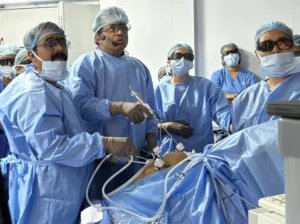
While conservative techniques like rectal shaving are ideal for localized bowel disease, there are clinical scenarios where deep infiltrating endometriosis has caused extensive, circumferential damage to the intestinal tract. When a rectal nodule is exceptionally large (typically greater than 3 centimeters), involves more than one-third of the bowel circumference, or has caused a significant narrowing (stenosis) of the internal bowel lumen, a more definitive approach is required. In these complex cases, Laparoscopic Segmental Rectal Resection represents the pinnacle of advanced surgical intervention.
A laparoscopic segmental rectal resection is a highly structured, major operation that involves removing the entire diseased segment of the rectum containing the endometriosis nodule and safely reconnecting the healthy portions of the bowel. It is an operation that epitomizes the necessity of a multidisciplinary approach. In our advanced center, these surgeries are co-managed by a specialized gynecological endometriosis surgeon and a dedicated laparoscopic colorectal surgeon, ensuring the highest standards of safety and technical execution.
The procedure begins with the complete mobilization of the lower colon and rectum using minimally invasive keyhole techniques. The surgical team carefully dissects the rectum away from the uterus and vagina, mapping out the precise boundaries of the deep infiltrating nodule. Once the boundaries are clear, the segment of the rectum containing the hard, fibrotic nodule is isolated. Using specialized laparoscopic linear staplers, the diseased segment from the body. The two healthy, disease-free ends of the bowel are then brought together and joined using an advanced circular stapling instrument—a process medically known as an anastomosis.
One of the key priorities during a segmental resection is the absolute preservation of the pelvic blood supply and the autonomic nerves that surround the lower bowel. Meticulous care is taken to perform a ‘nerve-sparing’ dissection, protecting the pelvic splanchnic nerves which control bowel and bladder emptying. Once the anastomosis is complete, a vital safety check called a ‘leak test’ is performed in the operating room to ensure the newly joined bowel is completely airtight and watertight.
In rare, ultra-complex cases where the nodule is located extremely low (very close to the anal sphincter) or when the tissue integrity requires extra time to heal, a temporary protective stoma (an opening on the abdomen with a bag) may be created. This stoma is completely temporary and is reversed a few weeks later once healing is confirmed.
While the thought of a segmental bowel resection can understandably cause anxiety, the long-term clinical outcomes are overwhelmingly positive. This definitive surgery completely removes the source of chronic intestinal obstruction and inflammation. Patients who have spent years suffering from excruciating cyclical bowel pain, severe bloating, and debilitating constipation experience an immediate and profound restoration of normal bowel function. It is a highly effective, transformative surgery that completely eradicates advanced rectal endometriosis, allowing patients to reclaim a normal, pain-free life.